Blog
ChatGPT will do the homework. That is the problem.
A lot of families already have a homework helper. It lives in a browser tab. It is fast, fluent, and usually willing to finish the sum.
That is ChatGPT doing what a generic chatbot is built to do: answer the question in front of it. For a working parent at 8pm, that can feel like relief. For the child, it can look like learning happened. Often it did not.
Jhamly is an AI tutor, not a chatbot with a school costume. It asks and hints before it tells. It remembers what your child struggled with last week. It checks practice questions before they are shown. Then it shows you whether anything actually moved.
We are not interested in winning a “versus AI” fight. ChatGPT is a capable general assistant. It is a poor tutor for a school child — because tutoring and answering are different jobs.
What ChatGPT is actually good at
Give a generic chatbot a well-posed question and it will usually produce a clean explanation. It is available at odd hours. It does not get impatient. For an adult who already knows the topic and wants a second pass, that is useful.
It is also generic. It does not know that your child is in CBSE Grade 7, that fractions were shaky last Tuesday, or that adding the top and bottom numbers straight across is the mistake that keeps coming back. When the tab closes, that child is gone.
None of that makes ChatGPT a villain. It makes it the wrong tool for homework with a child who still needs to learn the chapter.
ChatGPT vs Jhamly, side by side
The teaching loop behind the Jhamly column is on How it works.
| Job | A generic chatbot (ChatGPT) | Jhamly |
|---|---|---|
| Memory | Forgets the child when the tab closes, unless you re-explain them every time. | A living model across sessions: struggles, wins, explanation styles that work. The next session picks up where the last one ended. |
| Syllabus | General knowledge. You can paste a chapter name; it still does not be the board-and-grade map. | Aligned to the child’s board and grade, chapter by chapter. CBSE 3–12 is listed; Maths 3–8 is the deepest fully-tutored set. Honest map: Syllabus. |
| Verified practice items | Generates questions and answers on the fly. Confident, not checked for this child. | Practice questions are verified before your child sees them. When the tutor is not sure, it says so. |
| Silent quizzes | Will keep talking through a test if you let it. | During quizzes the tutor goes silent. The score is your child’s. Unaided checks can be labelled “home-verified.” |
| Parent transcripts | You see whatever the child shows you. No parent app, no weekly digest, no tap-to-see-the-actual-question. | Full chat transcripts, quiz history, and what the tutor remembers — in the parent app. Details on For parents. |
| Will not do the homework | Will, if asked. That is the product. | Will not. Guides, questions, works through the problem with the child. Doing the worksheet for them is the failure mode we designed against. |
ChatGPT is a general chatbot. Jhamly is a tutor with a memory and a report you can trust. Different jobs.
Will it just do my child’s homework?
No. If that is what you wanted, you already have ChatGPT.
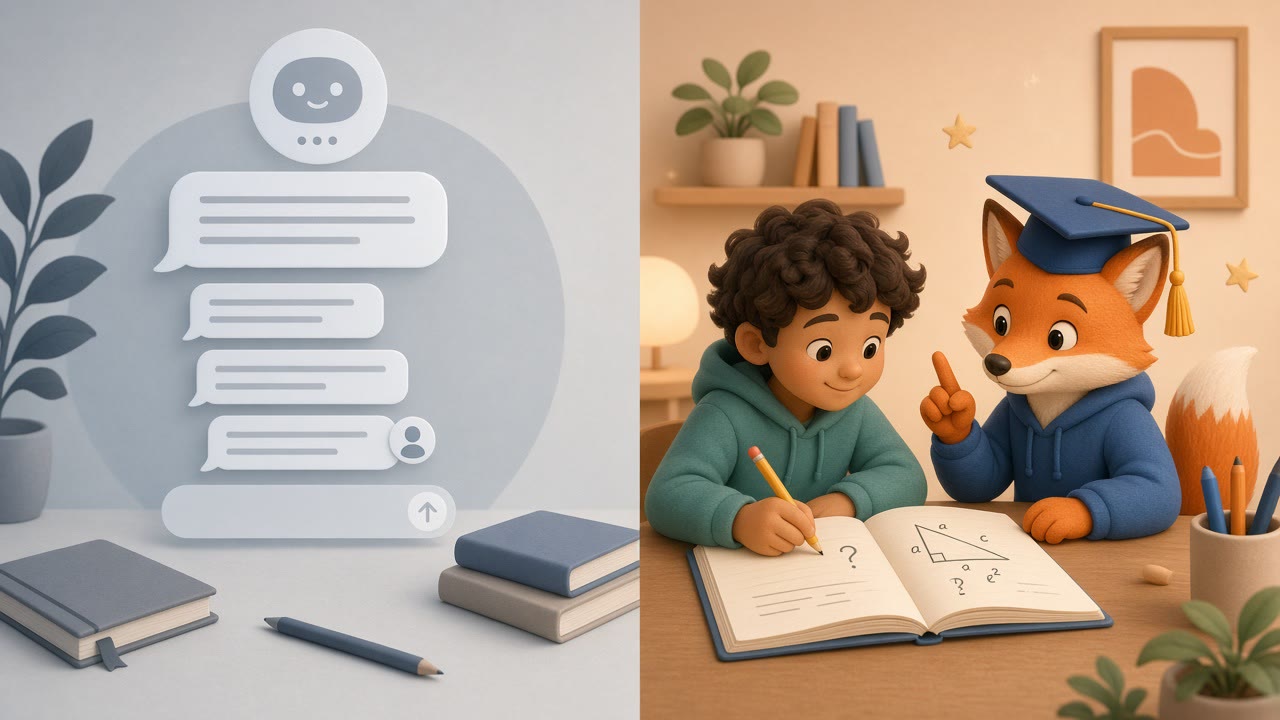
Jhamly’s tutor guides, asks questions, and works through problems with your child. During quizzes it goes silent, so the work you see is your child’s own. We would rather an honest “not yet” than a finished worksheet that taught nothing. That also means Jhamly will feel slower than a chatbot on the first evening. Good. The child should still be doing the thinking.
Can the AI still be wrong?
Yes, occasionally. Any AI can — including ours, including a chatbot.
That is why practice questions are verified before your child sees them, why wrong answers are mapped to named misconceptions, and why we still want students to check important answers against their textbook. A tutor that guesses confidently is worse than no tutor. Verification cuts errors down; it does not claim they can never happen.
What you can check that ChatGPT never shows you
Parents using a generic chatbot are left with a screenshot, or nothing. Jhamly gives you receipts: every conversation, readable in the parent app; misconceptions in plain language; one weekly email worth reading. A parent creates the account. India’s DPDP Act, 2023 requires verifiable parental consent. No ads, no behavioural tracking, no data sales. Conversations are not used to train models.
If the school also uses Jhamly for Institutions, the school still cannot see tutoring chats. That split is architecture, not a setting. The checkable list is on Safety.
If ChatGPT-as-homework-helper sits badly, that unease is the chatbot doing its job. Join the beta if you want the other job. Beta is free.
Questions parents actually ask
How is this different from just using ChatGPT?
A chatbot answers questions. Jhamly tutors: it asks and hints before it tells, remembers what your child struggled with last week, checks practice questions before they are shown, and then shows you the evidence of whether learning actually moved. A generic chatbot forgets your child when the tab closes.
Will it just do my child’s homework?
No — that is the failure mode we designed against. The tutor guides, asks questions, and works through problems with your child. During quizzes it goes silent, so the work you see is your child’s own.
Can I see what the AI tells my child?
Yes — everything. Full chat transcripts, quiz history, and what the tutor remembers about your child’s learning are visible in the parent app. There is no kids-only space in Jhamly.
Can the AI be wrong?
Yes, occasionally. Any AI can. That is why practice questions are verified before your child sees them, why wrong answers are mapped to named misconceptions, and why we still want students to check important answers against their textbook. We would rather say this plainly than pretend otherwise.
What does the AI remember about my child?
Things like which concepts are solid, which mistakes keep coming back, and which explanations have worked. You can see that in the parent app, in plain language — it is not a hidden profile.
Is Jhamly safe for my child?
Safety is built in, not bolted on: you can read every conversation the AI has with your child, practice questions are verified before your child sees them, there are no ads or trackers, and a parent approves the account before anything starts. Details live on our Safety page.
Related reading: how to spot learning gaps when the mark looks “fine,” and a parent checklist for a safe AI tutor for children. CBSE families: see the AI tutor for CBSE coverage page.
If you want a tutor, not an answer key
A parent signs up, adds a profile, and the child gets a login code. It runs on everyday phones. One account can hold more than one child; memories do not mix.
Join the beta. If CBSE is the board, say so on the form — the CBSE hub is the honest coverage page. Anything else: FAQ or support@jhamly.com.